CEP SERIES
Electronic overcurrent protection

XCEPD2

Original price was: €151,70.Current price is: €83,44. + VAT

PCS PER PACK1

Temporarily not available for online purchase. Contact our sales department.

Temporarily not available for online purchase. Contact our sales department.

Temporarily not available for online purchase. Contact our sales department.
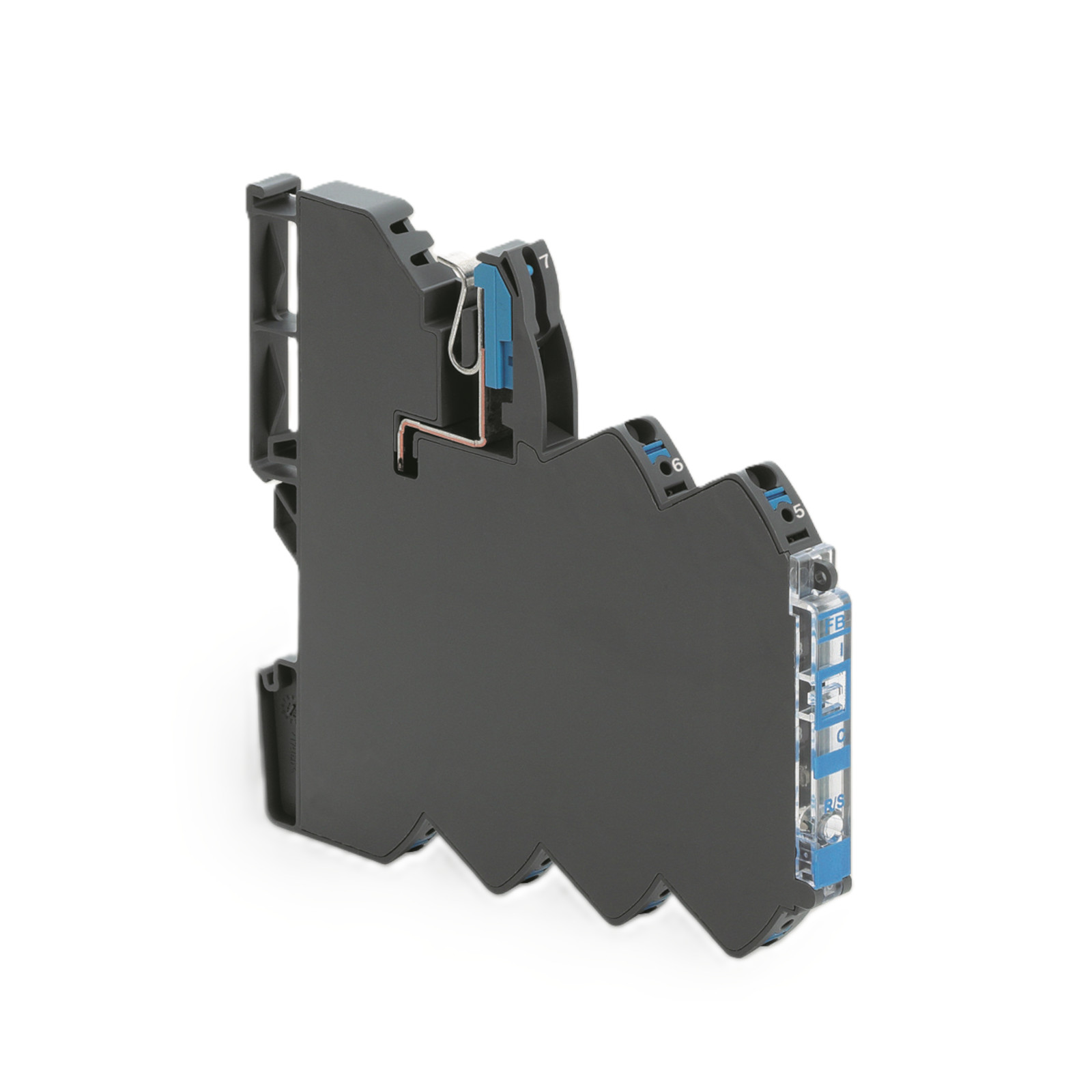
CEP-D2 Programmable electronic protection 1–10A 12-24Vdc
1 channel programmable from 1 to 10 A
5 programmable characteristic curves
Remote or local ON/OFF control
Remote alarm and LED status signaling green / red
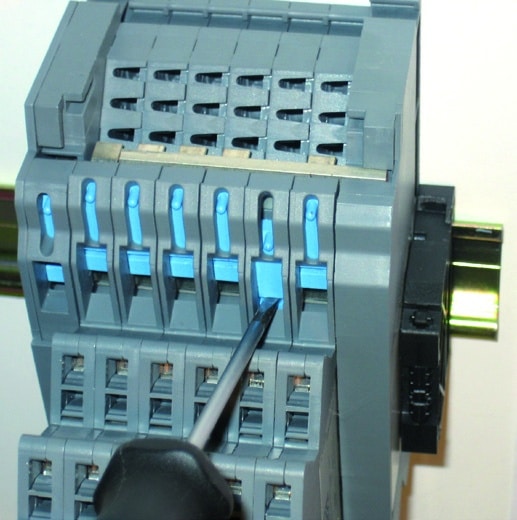
Sliding contact for distribution busbar connection
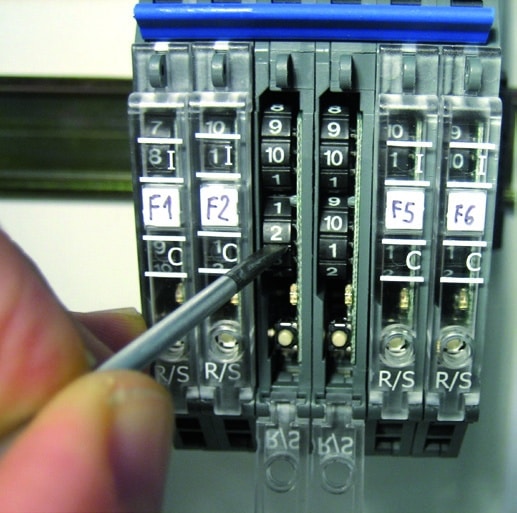
Sealable front cover for programming protection

Additional information

Series
Code
Type
HS code
INPUT TECHNICAL DATA
Input rated voltage
Input voltage range
Input current
OUTPUT TECHNICAL DATA
Version
Output voltage range
Continuous current
Max system current
Curve di intervento
Max connectable output capacity
Protection
Controllo remoto ON / OFF
Status indication
Alarm contact
GENERAL TECHNICAL DATA
Operating temperature range
Safety Standard
EMC Standard
Protection degree
Connection terminal
Housing material
Dimensions (LxHxD)
Approximate weight
Mounting information
ACCESSORIES
Mounting rail (IEC60715/TH35-7.5)
Marking tag
Ponte di alimentazione XCEPRCC (1 m) XCEPRCC04 (for 4 modules) XCEPRCC08 (for 8 modules) XCEPRCC16 (for 16 modules)
Supporto ponte di alimentazione XCEPSS
Copertura ponte di alimentazione XCEPRCP
Ponte segnali XCEPBCR (8 poles red) XCEPBCB (8 poles blue)
APPROVALS AND MARKINGS

NOTES

Remote control is performed via 24 VDC pulses of different durations

For more information, download the PDF catalog

According to the new EN 60204-1 standard, it is mandatory to provide overcurrent protection for SELV-PELV line cables. The standard requires that overcurrent protection devices on the 24 Vdc line must clear faults before the 24 Vdc control and command voltage drops below 21.6 V, which would otherwise remove power from the control system and prevent the activation of emergency and safety functions.

According to EN 60204-1 and EN 61131-1 and -2, overcurrent protection on SELV-PELV lines must be capable of clearing short circuits within 10 ms and hazardous overcurrents within 5 seconds. The use of power supplies with high output overcurrent capability, combined with precise and fast protection devices, facilitates fault clearing before the 24 V voltage drops below 21.6 V, thus preventing loss of power to the controls.

Fuses and miniature circuit breakers (MCBs) installed on 24 Vdc lines have I²t tripping characteristics that are not suitable for clearing faults with the speed and precision required. Moreover, fuses may be replaced with different types, altering the protection behavior and compromising system safety.

Proper coordination of the circuit in which the overcurrent protection is installed must take into account the total line resistance:
R_total = R_connections + R_cables + R_protection + residual R of the faulty load.

The total resistance must always allow the guaranteed tripping current of the protection device to circulate in the circuit. It is essential to avoid undersizing the protection device (which could cause nuisance tripping due to load inrush currents) or oversizing it (which would increase the tripping time).

The entire circuit—comprising the power supply, overcurrent protection, cables, and connections—must be designed to ensure safe interruption of overcurrents within 5 seconds, before the 24 Vdc drops below 21.6 Vdc.

This condition can be met by using Cabur CSF and CSG series power supplies, designed to deliver high output overcurrent (> +50% of nominal current for more than 5 seconds), together with CEP System electronic overcurrent protection devices featuring much higher precision and speed than MCBs and fuses, whose tripping time is independent of ambient temperature and which can be reset locally or remotely.

Protection Device Characteristics

Miniature circuit breakers (MCBs) have two different tripping curves: thermal and magnetic.

The magnetic release trips only in case of short circuit, with different I/t curves. The thermal releases have the same tripping curve regardless of the MCB characteristic curve, and in overload conditions behave as shown in Fig. 2:

  • Overload currents of 1.13 × In are cleared in more than 1 hour.

  • Overcurrents greater than 1.45 × In trip in several minutes.

Short-circuit interruption is performed by the magnetic release, whose tripping time ranges from 0.01 to 0.1 seconds. However, this requires very high currents that the power supply used may not be able to deliver.

For example, a C5 MCB used in DC requires more than 70 A for guaranteed tripping—a current that only power supplies with much higher nominal current (e.g., 40 A, and not all of them) can deliver, and which is certainly not deliverable by 10 A power supplies.

When using MCBs as overcurrent protection devices, if the power supply has an overload current of 1.2 times its nominal current, interruption will occur after 20–60 minutes. With a current 2.5 times the nominal value, tripping will occur between 25 seconds and 2 minutes depending on ambient temperature.

These times are too long to ensure 24 V stability, cable protection, and protection selectivity. In the event of a fault, until the protection trips, the power supply remains overloaded at more than In × 1.5 for over 5 seconds, and the 24 V drops below 21.6 V, leaving normal functions—and especially safety functions—without power.

Protection Selectivity

In the event of overload or short circuit, only the faulty circuit is disconnected by its dedicated protection device, without affecting the power supply to other loads.

This function is achieved by using power supplies with high overcurrent capability combined with fast and precise protection devices.

CEP System – Intelligent Current Control System

CEP “recognizes” overcurrent at the lowest and most precise threshold possible and disconnects the faulty circuit in the shortest possible time.

For maximum flexibility, the CEP system allows setting 10 tripping currents from 1 A to 10 A in 1 A increments, and 3 tripping curves: “Fast – Normal – Delayed” (see Fig. 3).

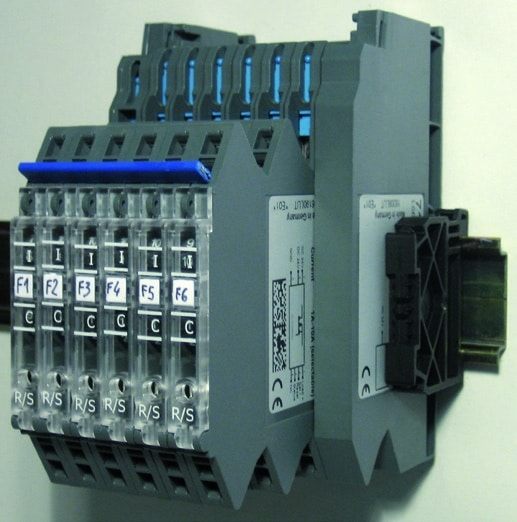
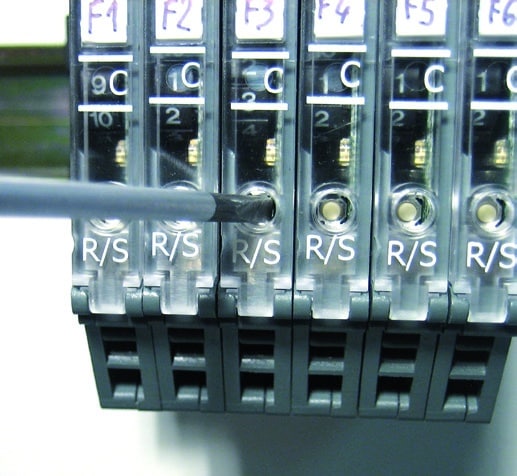
The protection status is indicated by two LEDs and a remote alarm transistor output. The load can be activated/deactivated using the front pushbutton (Fig. 5) or via remote PLC command.

The ability to control individual channels separately is particularly useful during installation, as components can be activated and tested individually. In large systems, remote control can be used to gradually activate different loads, avoiding multiple simultaneous overloads during system startup.

Additional safety is provided by the possibility of manual load disconnection. Even if remote reset of the protections is commanded, the load will remain inactive, thus preventing hazardous conditions.

fig. 1
fig. 2
fig. 3
fig. 4

IN THE SAME CATEGORY

Solutions for automations and control

New Cabur CSE series switching power supplies

The new range is part of the Easy Power series and represents an advanced solution in the field of industrial power supplies. It is designed for standard applications that require an excellent price/performance ratio, small footprint and high power density, an extended operational temperature range and high energy efficiency.

READ MORE »

ISCRIVITI ALLA NEWSLETTER

NEWSLETTER

This field is for validation purposes and should be left unchanged.
Name(Required)
Email(Required)
Address(Required)
Privacy(Required)
The consent to the subscription to the Cabur Newsletter can be revoked, at any time, using the unsubscribe procedure available on the emails sent. PRIVACY POLICY

SUBSCRIBE TO OUR NEWSLETTER

NEWSLETTER

This field is for validation purposes and should be left unchanged.
Name(Required)
Email(Required)
Address(Required)
Privacy(Required)
The consent to the subscription to the Cabur Newsletter can be revoked, at any time, using the unsubscribe procedure available on the emails sent. PRIVACY POLICY

CABUR CUSTOMER CARE

for technical support
+39 019 58999.219  customercare@cabur.it
for commercial support
+39 019 58999.609 vendite@cabur.it

from monday to friday 8:30-12:30 13:00-17:00